Turning Leaf Blog

Gaslighting: The Artistry of a Narcissist

Comments: 0
Puppet Master

Guest Blogger: Alisa Stamps, MSS, LCSW

Have you ever been in a situation where you just can’t seem to remember exactly how the events played out? Maybe you went out to eat with your partner and you remember having the fish, but your partner insists you had the chicken? And your partner does everything they can to convince you that you are not remembering things—what YOU ate--correctly? Sounds pretty harmless, right? Well, not when you involve a narcissist…

Who Really Wants to do Therapy, Anyway?

Comments: 0
I don't need therapy

Guest Blogger: Emily Potter Cox, MA, LPC, CYT

What really happens when you sit and talk with someone, anyway? Does it work? Do they just want to take your money? It is not uncommon to have fears and reservations about starting or continuing with therapy, ESPECIALLY if you have seen a crappy therapist in the past. If you have---I’m so sorry. Like all professions, some of the practitioners are not as competent as others. BUT-- when you find that right person and you get that *click*, it is worth it!

Narcissists and Shame: A Grandiose Relationship

Comments: 0
Shame

​Guest Blogger: Alisa Stamps, MSS, LCSW ​

In my last blog post, I mentioned that we would continue to address such questions as, “Are you wondering if you’ve been in a relationship with a narcissist?”; “What happens now that you’re aware of this”; and lastly, and maybe the most important question, “How do we get to the point where we can look in the mirror and see ourselves and not the narcissist?”. In order to begin to answer these questions we have to do it. We have to talk about shame.

6 Steps to Help Someone Get Out of a Flashback

Comments: 0
Get Out of a Flashback

​Written by: Kaycee Beglau, PsyD

Whether it’s a friend, relative, or partner, we sometimes find ourselves with someone who suddenly begins to experience the acute effects of trauma. This typically presents as sudden fear or panic, flashbacks, intrusive negative thoughts related to the trauma, or dissociative states where the person appears to “not really be there” anymore. Of course, these experiences may be frightening, confusing, and overwhelming for the person experiencing them, and they may also be for the person witnessing them as well. If you are in a relationship with someone who frequently experiences these symptoms in your presence, it may be beneficial and empowering to have a sense of what might be helpful for the person in that situation.

How to Help Your Child with Big Transitions (Like Starting Middle School!)

Comments: 0
Help Your Child with Big Transitions

​Guest Blogger: Katie Fries, LCSW, RPT

It can be very easy (and understandable!) to assume that the struggles you faced in middle school are the same ones your child will experience: mean girls, peer pressure, opening lockers—you name it. And while some of those fears seem to stand the test of time (have they changed those dang padlock lockers?!), others will change based on both new forms of communication (like social media) as well as your child’s individual strengths and challenges.

Reflections: Images of a Narcissist

Comments: 0
Reflections: Images of a Narcissist

​Guest Blogger: Alisa Stamps, MSS, LCSW

Who do you see when you look in the mirror? Do you see your smile, your shining eyes, the incredible qualities that you bring to your life? Or do you see the “bad” traits? Maybe even the traits that were projected there by someone else. That you are lazy, stupid, too heavy, or maybe even not good enough? How do you feel about the face looking back at you? Do you feel pride? Or do you feel full of shame? Who do you see when you look in that mirror? Is it you? Or is it someone else entirely?

The Lost Childhood: Role Reversal and the Parentified Child

Comments: 0
The Lost Childhood: Role Reversal and the Parentified Child

Written by: Kaycee Beglau, PsyD

“Children are not meant to provide the emotional or psychological needs of parents.” – Sheila Darling

“It’s all My Fault” – Why do I Blame Myself for My Trauma?

Comments: 0
Why do I Blame Myself

Written by: Kaycee Beglau, PsyD

Traumatic experiences profoundly affect us in deeply personal ways, in part, because they make us feel out of control in this world, feel unsafe with others, and even unsafe with ourselves. We start to feel unsafe with ourselves, for example, when we question our own judgments, lose trust in ourselves, or carry a sense of inner badness, defectiveness, or self-disgust. We may find ourselves asking questions like, “Why did this happen to me?” or “What did I do to deserve this?” Sometimes, this inner sense of being to blame or of having some kind of inner “badness” is so significant, it makes us question or lose faith in our spiritual belief system. For example, we may say “I’m so awful, not even God could love me.”


5 Steps to Find the Courage to get the Help You Need After Abuse or Trauma

Comments: 0
Find the Courage to get Help

​Written by: Kaycee Beglau, PsyD

Beginning therapy for the first time or with a new therapist can be a scary, terrifying situation. This can be true for anyone, but especially for people who have experienced any kind of abuse or trauma. There may be a part of you that acknowledges you need help, but another part (or parts) of you that are afraid to seek help or believe that it is pointless. Having the ability to trust another person with these deepest, darkest aspects of yourself or your history may seem impossible. Still, it may be terrifying to even think about talking about the trauma or abuse, and you may believe this is what will be required of you in order to be in therapy.

Trauma: A Word with Different Meanings

Comments: 2
Feelings Flower

​Written by: Kaycee Beglau, PsyD

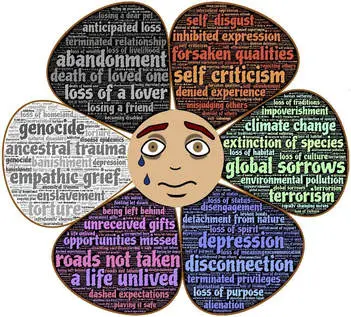
These days it seems there is a misconception, or even a “watering down” of what the word trauma actually means. In everyday conversations, the word “traumatic” can be used in the same way as words like “stressful” or “upsetting.” For example, we have all seen the dramatized, reality tv-show star say something to the effect of, “Finding out my wrinkle cream has been discontinued has been really traumatic for me.” But, if you have lived through a traumatic experience, you know on a deep level that trauma and stress are not the same thing.