
Traumatic experiences profoundly affect us in deeply personal ways, in part, because they make us feel out of control in this world, feel unsafe with others, and even unsafe with ourselves. We start to feel unsafe with ourselves, for example, when we question our own judgments, lose trust in ourselves, or carry a sense of inner badness, defectiveness, or self-disgust. We may find ourselves asking questions like, “Why did this happen to me?” or “What did I do to deserve this?” Sometimes, this inner sense of being to blame or of having some kind of inner “badness” is so significant, it makes us question or lose faith in our spiritual belief system. For example, we may say “I’m so awful, not even God could love me.”
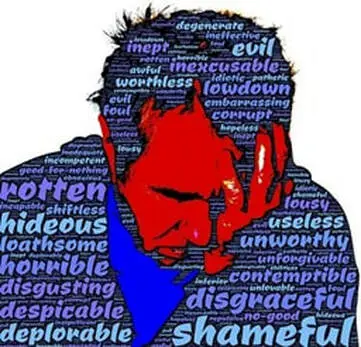
Inevitably, those who have experienced trauma find themselves trying to sit with and make sense of a tangled knot of intense emotions. These can include feeling anxious, frightened, alone, angry, sad, depressed, guilty, and ashamed. When these emotions are accompanied by thoughts of self-blame or self-hatred, it’s like pouring gasoline on a blazing fire. For example, when we are already feeling sad and alone, to think thoughts like, “It’s all my fault” or “I should have done something different” only makes us feel more depressed and isolated from others. So, in this way, a vicious cycle of negative, intense emotions and social isolation is perpetuated.
Why is blaming oneself for traumatic experiences so common even though it can make us feel so much worse? To outsiders, it may seem obvious it is not our fault or even absurd that these kinds of thoughts could be believable to us. But, the truth is, there are many understandable reasons why we can tend to blame ourselves. These reasons often center around themes of either 1) Needing to have a sense of control or 2) Needing to have a sense of meaning. Following is a list of some examples of underlying (or unconscious) reasons why we can hold on to self-blame after traumatic experiences:
- It feels better to believe we either did have control (e.g., I caused this because I am bad) or that we could have had control (e.g., if I didn’t make him angry with me, he wouldn’t have hurt me). Essentially, if we feel like we have control then it can feel like we can prevent future traumas from happening and we will ultimately be safer.
- If we were raised in families where, as children, we were blamed when bad things happened, this may feel like a natural “role” we readily take upon ourselves.
- It can feel easier to blame ourselves than to ponder philosophical or spiritual questions about why bad things happen to good people. We can preserve our spiritual beliefs or our framework for how we make meaning out of life that way.
- It can feel safer to be angry at ourselves than others that we love or even at God or the world.
With this being said, it makes perfect sense to me why some end up carrying around this sense of self-blame despite how much worse it can make things feel. On the other hand, it has been my experience that those who carry these feelings around the most are also the ones who carry a tremendous amount of shame and who are the most likely to be suffering from other serious symptoms of Post-Traumatic Stress Disorder (PTSD). This may be because the shame is so powerfully painful, it can keep us from talking about or coping with the traumatic experiences in ways that could ultimately be healing and freeing. The shame keeps us wanting to avoid the trauma-based thoughts, feelings, and memories and from sharing these with potentially helpful others because it can be so frightening and painful. However, the avoidance only ends up keeping us trapped inside ourselves, without being able to get the support needed to face, process, and ultimately resolve the feelings of shame or guilt and to heal from the traumatic experiences themselves.
If you find yourself relating to these experiences of self-blame, I encourage you to find someone you can trust (even just a little bit at first), whether that is a friend, a relative, a spiritual or religious leader, or a licensed therapist and start to take the healthy risk of sharing your story with someone. Its going to feel very scary and painful at first, but over time, having someone hear your story and accept it without judgement can help you start to resolve these feelings of shame, self-blame, and self-hatred and to move forward in your life.